Japan Branded Residences Market Snapshot 2026
Market reports
TO DISCUSS YOUR PROJECT OR LEARN MORE ABOUT OUR SERVICES:
Category: Branded Residences
Japan is Asia’s sixth-largest branded residences market by value at USD3.1 billion, reaching 1,012 launched units, 2% of the regional total, at an average sales price of JPY481 million (USD3 million) per unit. The Japan Branded Residences Market Review 2026 examines national supply by destination and product type, with a focus on Niseko and Japan’s alpine resort markets. The review also covers rental yields, capital growth, construction costs, currency movements and transport access. Resort destinations account for 91% of the 1,917 units in total supply, and Niseko alone holds 57%.
1. Japan Ranks Sixth in Asia by Value on 2% of Launched Units
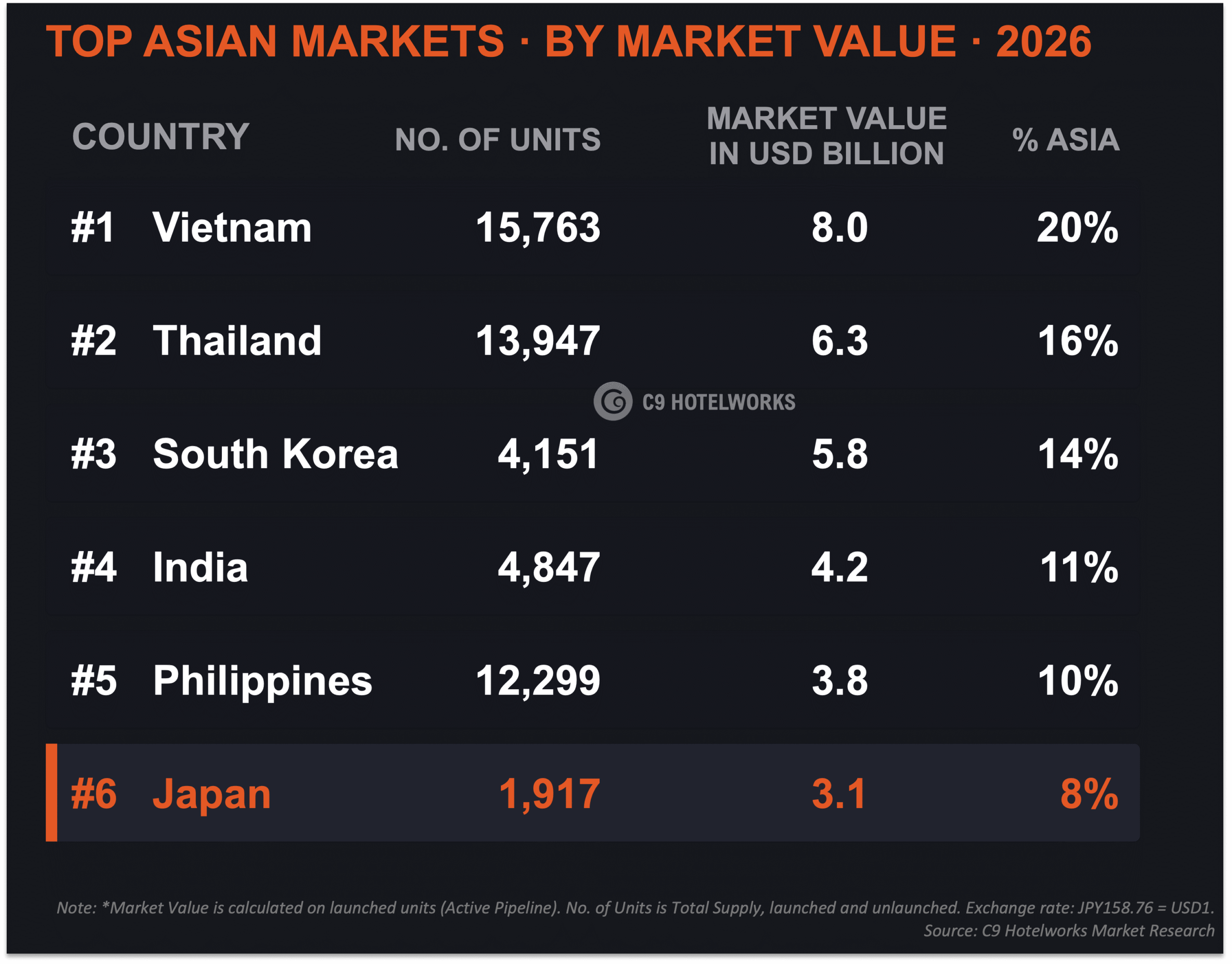
Japan’s branded residences market value reached USD3.1 billion (JPY487 billion) in 2026, sixth in Asia and 8% of the region’s market value. Vietnam leads at USD8.0 billion, followed by Thailand (USD6.3 billion), South Korea (USD5.8 billion), India (USD4.2 billion) and the Philippines (USD3.8 billion). This value comes from 1,012 launched units, 2% of Asia’s 50,025 launched units. Its average sales price of JPY481 million (USD3 million) per unit is the second highest among Asia’s branded residences markets, and 68% of properties sit in the luxury tier.
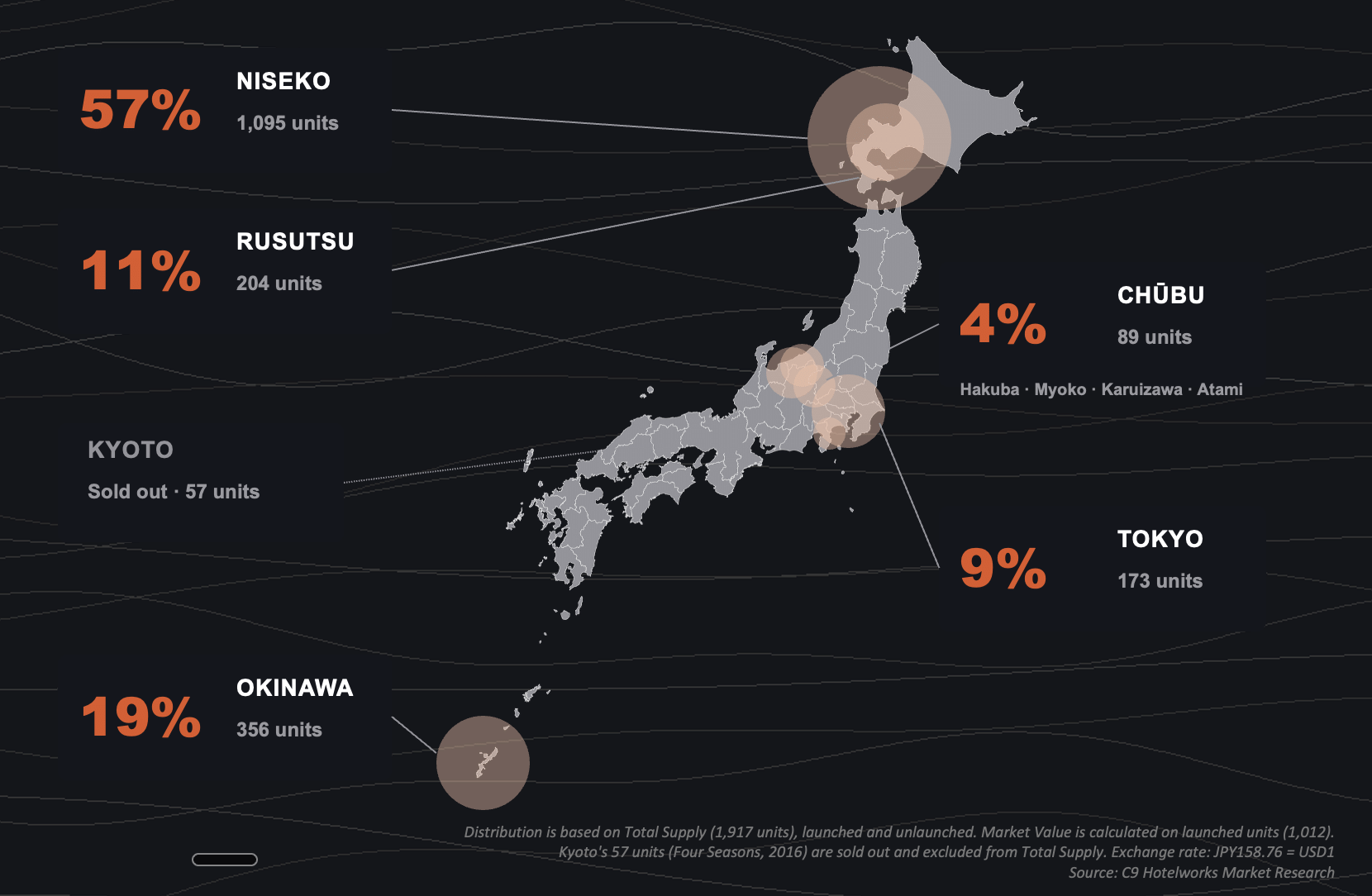
Resort destinations account for 91% of the 1,917 units in Total Supply and urban destinations 9%, with 72% of supply in alpine resort destinations. Niseko holds 1,095 units, followed by Okinawa at 356, Rusutsu at 204, Tokyo at 173 and the Chūbu region at 89, while Kyoto’s 57 units are sold out. Condominiums make up 87% of supply, hybrid schemes 8% and landed properties 5%, and 596 units are scheduled for completion in 2026.
2. Niseko Remains Japan’s Leading Branded Residences Market as New Air Services Arrive
Niseko holds 57% of Japan’s branded residences supply, 1,095 of 1,917 units. Winter visitor arrivals across Kutchan, Niseko and Rankoshi rose 8.4% year-on-year to 2.14 million between October 2025 and March 2026, and hotel supply grows 18% in 2026, from 1,727 to 2,037 keys. One Hanazono Villas, comprising 13 Park Hyatt branded villas at Hanazono, was announced in September 2026.
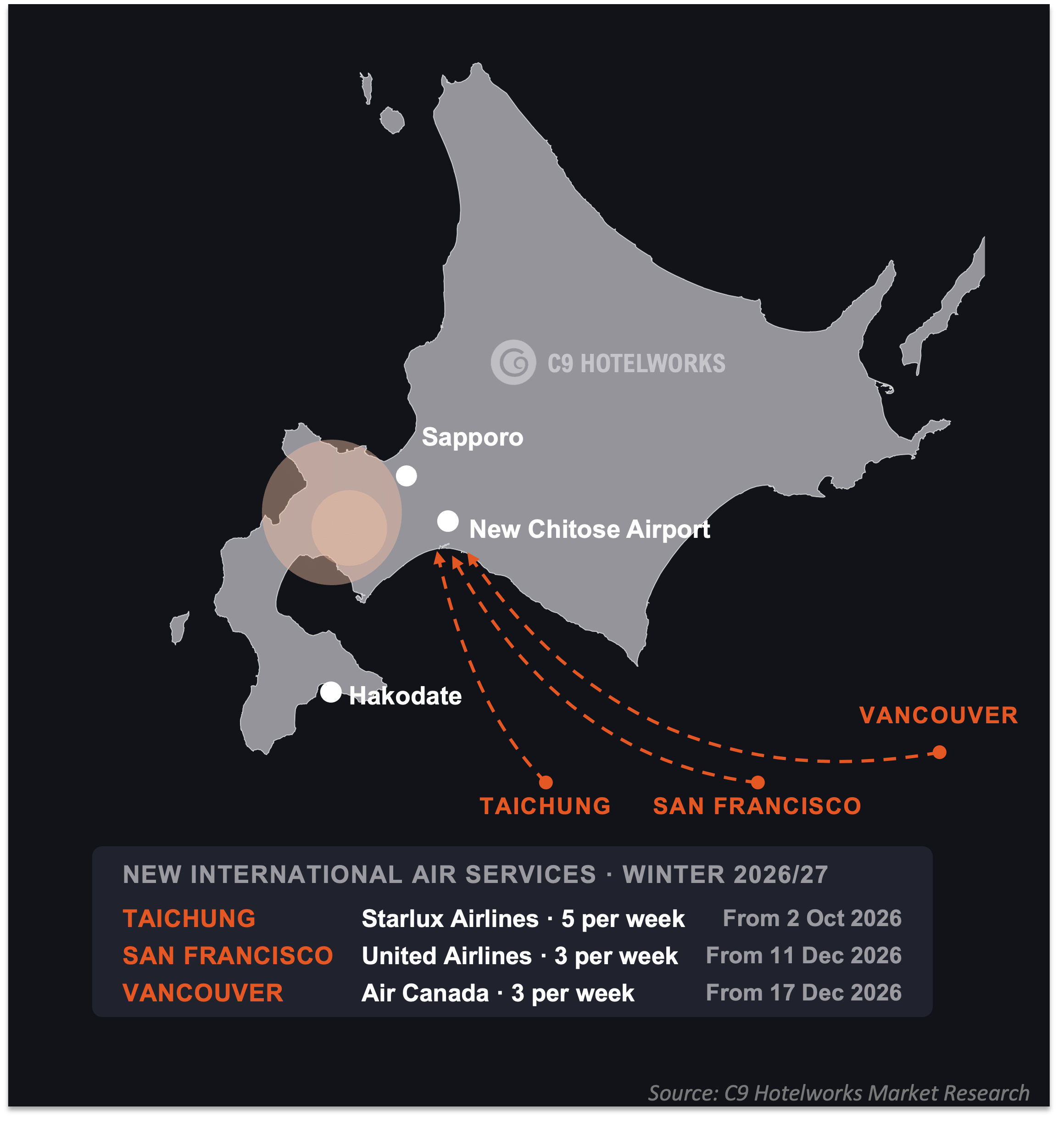
Across all Niseko residential supply, Hirafu and Outer Hirafu account for 63%, Hanazono 27%, Niseko Village 7% and Annupuri and Kutchan 3%. Condominiums represent 69%, land plots 23% and villas 8%. Excluding Hotel101 Niseko and its 482 condotel units, the mix is condominiums 45%, land plots 41% and villas 14%. Three new international air services reach New Chitose Airport in winter 2026/27: STARLUX Airlines from Taichung at five weekly flights from 2 October 2026, United Airlines from San Francisco from 11 December and Air Canada from Vancouver from 17 December, each at three weekly flights.
3. Capital Growth Outweighs Rental Yield Appeal
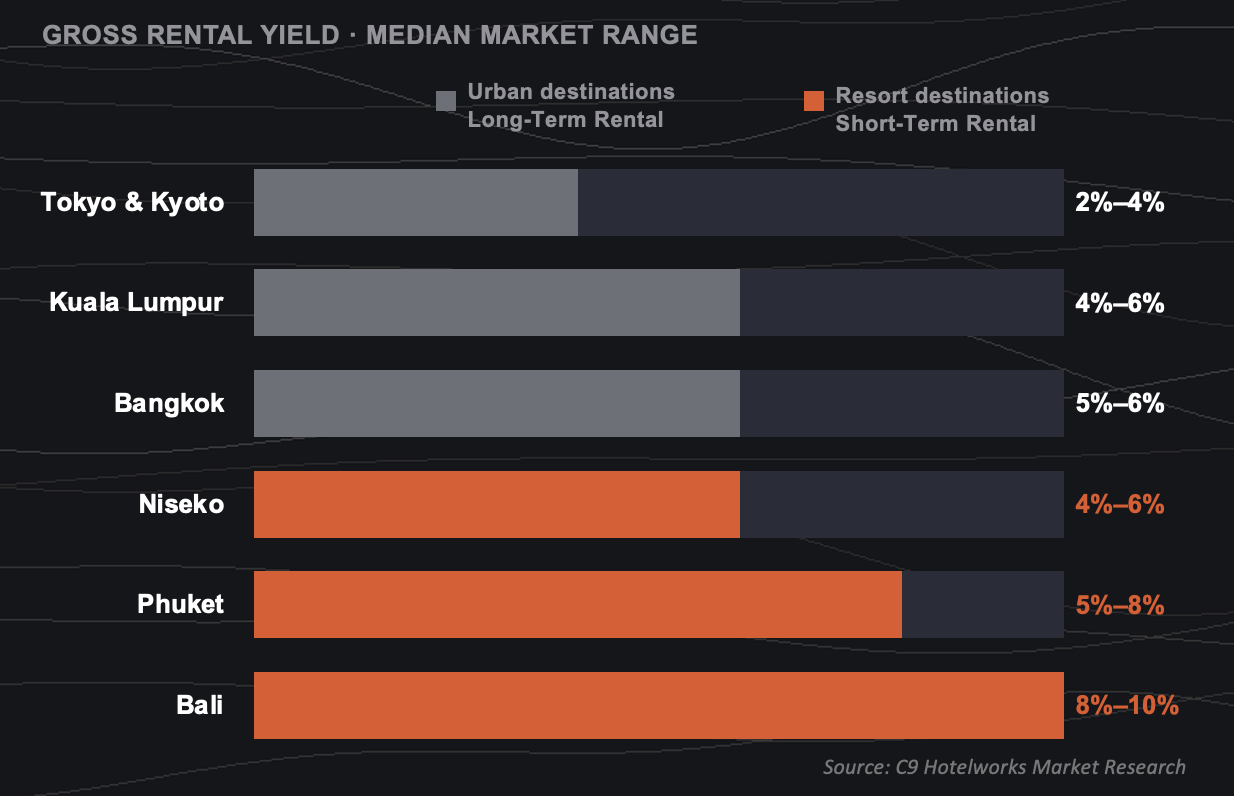
Rental income is hard to earn in Japan. Short-term rental has been capped at 180 days a year since June 2018, about 60 days in parts of Kyoto and zero in designated areas, and only a licensed hotel building can rent year-round. Gross rental yields in Tokyo range from 2% to 4% on long-term rental, against 4% to 6% in Kuala Lumpur and 5% to 6% in Bangkok. In resort destinations, Niseko achieves 4% to 6% on short-term rental, against 5% to 8% in Phuket and 8% to 10% in Bali.
Buyers in urban destinations are domestic-led end-users buying a primary or secondary residence, while resort buyers are international-led and buy holiday homes for seasonal use. What they are buying is capital growth, and land prices show it. In the July 2026 survey (1 July 2025 to 1 July 2026), residential land prices rose in every alpine destination tracked — from 4.3% in Rusutsu and 8.7% in Kutchan to 18.5% in Myoko, 31.3% in Hakuba and 32.0% in Furano, against a national average of 1.0%.
4. Construction Costs Rise 35% as a Weaker Yen Lowers Prices for Dollar Buyers
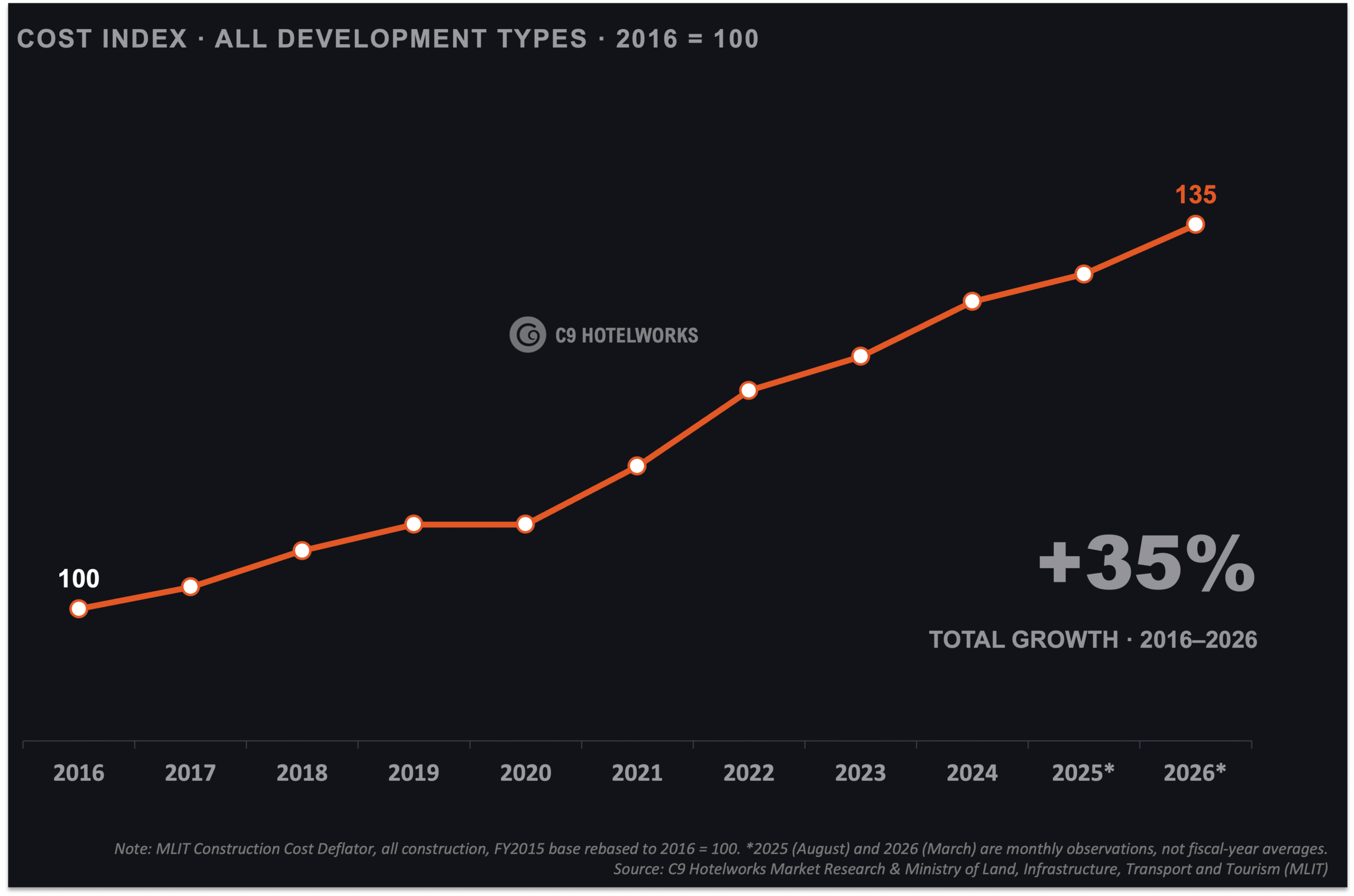
Japan’s construction cost index for all development types reached 135 in March 2026 (2016 = 100), a 35% increase, with a compound annual growth rate of 3.6% from 2021 to 2026. Costs rose 4.9% in 2021 and 6.2% in 2022 on higher material and energy prices. From April 2024 the statutory overtime cap of 45 hours a month and 360 hours a year applies to construction, adding labour cost pressure and extending delivery timelines.
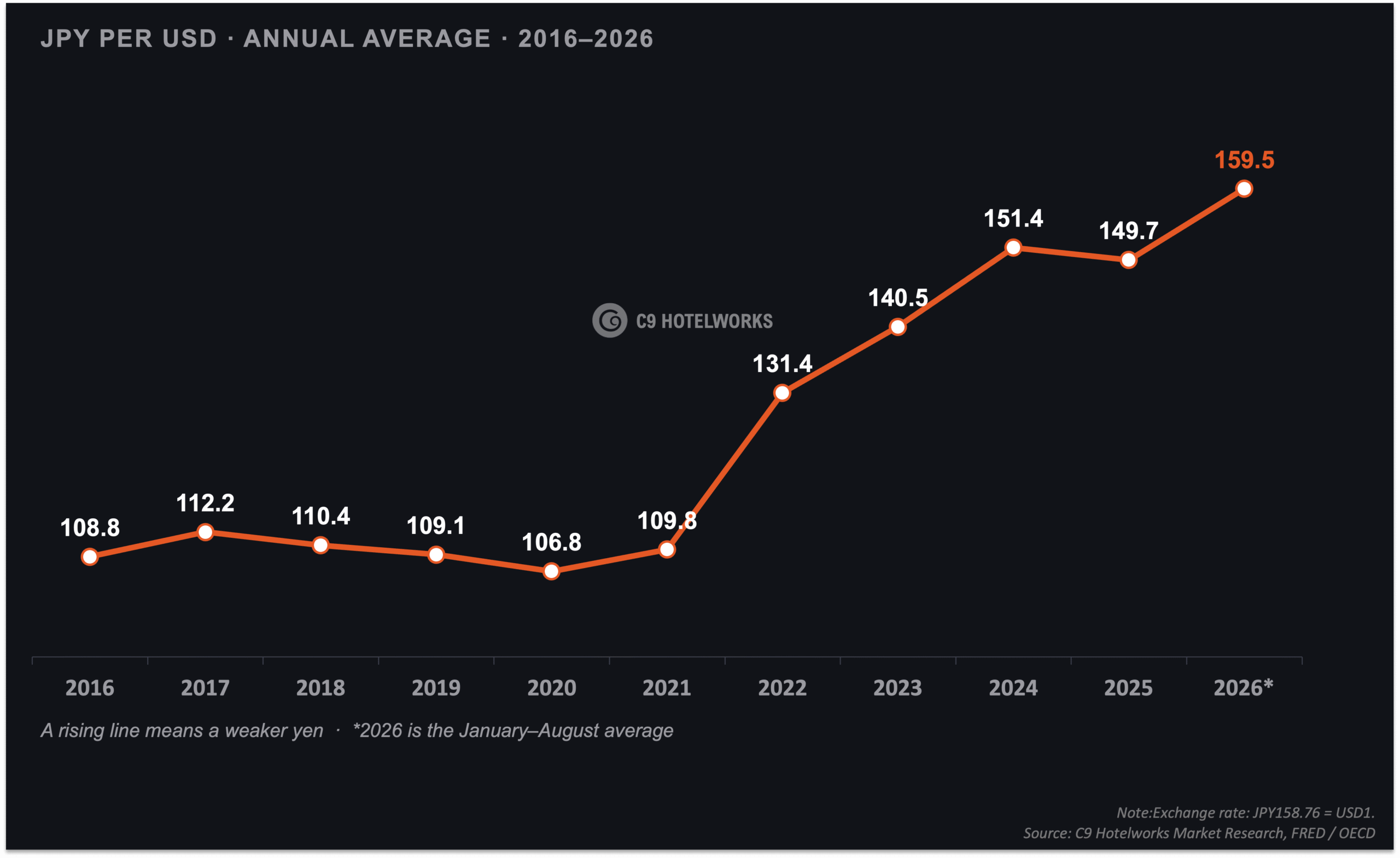
The yen averaged JPY159.5 per USD during January to August 2026, against JPY108.8 in 2016, a 46.6% increase in JPY per USD. A property priced at JPY150 million cost USD1.4 million in 2016 and USD0.94 million in August 2026, a 32% discount on currency alone. The same weaker yen raises the cost of imported materials, so currency lowers the entry price for international buyers while adding to development costs.
5. Railway Access Remains Crucial to Alpine Markets
Hakuba in Nagano recorded Japan’s second-highest residential land price increase in the July 2026 Prefectural Land Price Survey, at 31.3% year-on-year, reaching JPY17,600 per square metre at Hokujo. Commercial land at Hakuba Station rose 35.6%, the highest in Japan. Winter ski resort visitors across the ten Hakuba Valley resorts reached 1.9 million in 2025/26, up 3%. Hakuba is about one hour by road from Nagano station on the Hokuriku Shinkansen, and Banyan Tree Hakuba is targeting 2028.
Myoko Kogen in Niigata recorded an 18.5% residential land price increase at Sekikawa, the largest rise in the prefecture, with ski resort visitors in Myoko city at 0.7 million, up 4.5%. Joetsu-Myoko station is 80 to 110 minutes from Tokyo, then about one hour by road. Patience Capital Group is developing a mixed-use resort of hotels, residences and retail, with Six Senses Myoko targeting 2028 as phase one.
Niseko is different. The Hokkaido Shinkansen extension to Kutchan has moved from FY2030 to about FY2038, so access is by air through New Chitose Airport. Rail is an advantage for Hakuba and Myoko, not a requirement for Niseko.