Japan Branded Residences Market Review 2026
Market reports
TO DISCUSS YOUR PROJECT OR LEARN MORE ABOUT OUR SERVICES:
Category: Branded Residences
Vietnam is Asia’s largest branded residences market by value at USD8 billion, around one-fifth of the region’s USD40 billion, with 47 projects and 15,763 units as of June 2026. The Vietnam Branded Residences Market Review 2026/2027 covers Ho Chi Minh City (HCMC), Hanoi, Da Nang and Phu Quoc, along with Hai Phong, Ha Long, Hoi An, Dong Nai and Nha Trang. The review compares Vietnam with other markets in Asia and examines supply distribution by location, regional sales price benchmarks and USD126 billion of approved infrastructure investment through 2035. Resort destinations account for 79% of total units, and 7,660 units are due for completion in 2026 and 2027.
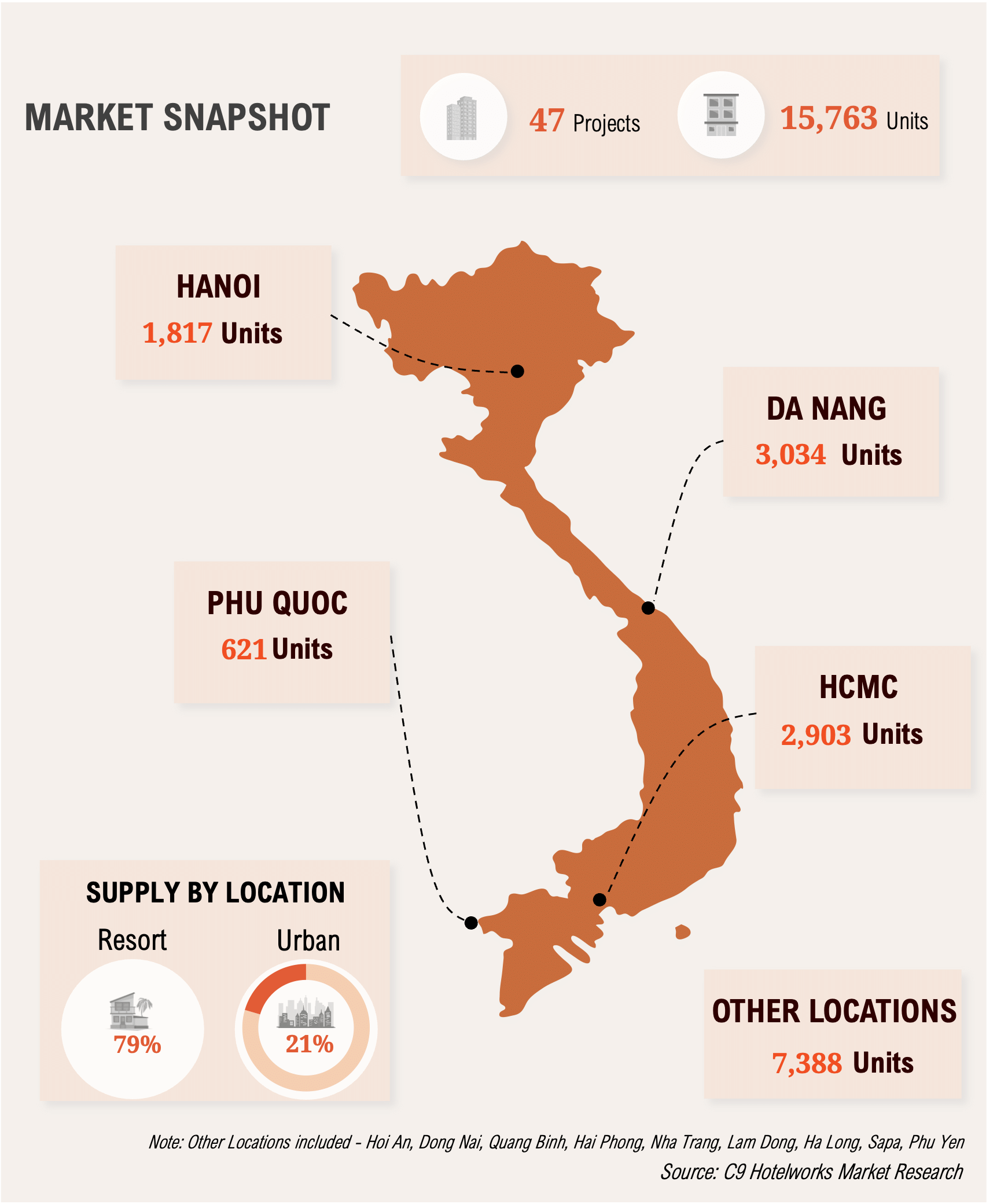
Vietnam’s branded residences market comprised 47 projects and 15,763 units as of June 2026, with an estimated value of USD8 billion. Resort destinations account for 79% of total units and urban markets 21%. Upscale units are the largest share of national supply at 49%, followed by Luxury at 22%. Upscale supply is concentrated in resort provinces, including Quang Binh, Lam Dong and Da Nang, while Luxury units are mainly in HCMC and Hanoi.
Da Nang has the most units, at 3,034 across 12 projects, but most are Upscale, so its value is USD1.7 billion, or 21% of the national total. HCMC has fewer units, at 2,903, but more are Luxury, and it holds the highest value at USD3.3 billion (41%). From 2026 to 2027, 7,660 units, or 49% of national supply, are due for completion, compared with 4,130 completed before 2025.
2. Vietnam Leads Asia’s Branded Residences Market by Value
Vietnam leads Asia’s branded residences market by value at USD8 billion, ahead of Thailand, South Korea, India, the Philippines and Japan. The lead comes with over 12,000 launched units, even though Thailand has a larger launched supply and project pipeline. Market value and average value per unit are calculated on launched units only.
Vietnam and Thailand are Southeast Asia’s two largest branded residences markets by value, each with over 12,000 launched units, placing both well ahead of other Southeast Asian markets. Launched supply drops considerably beyond the top three markets, with four markets recording fewer than 4,000 units each, showing an uneven distribution of development activity across Asia.
3. Ho Chi Minh City and Da Nang Account for 62% of Market Value
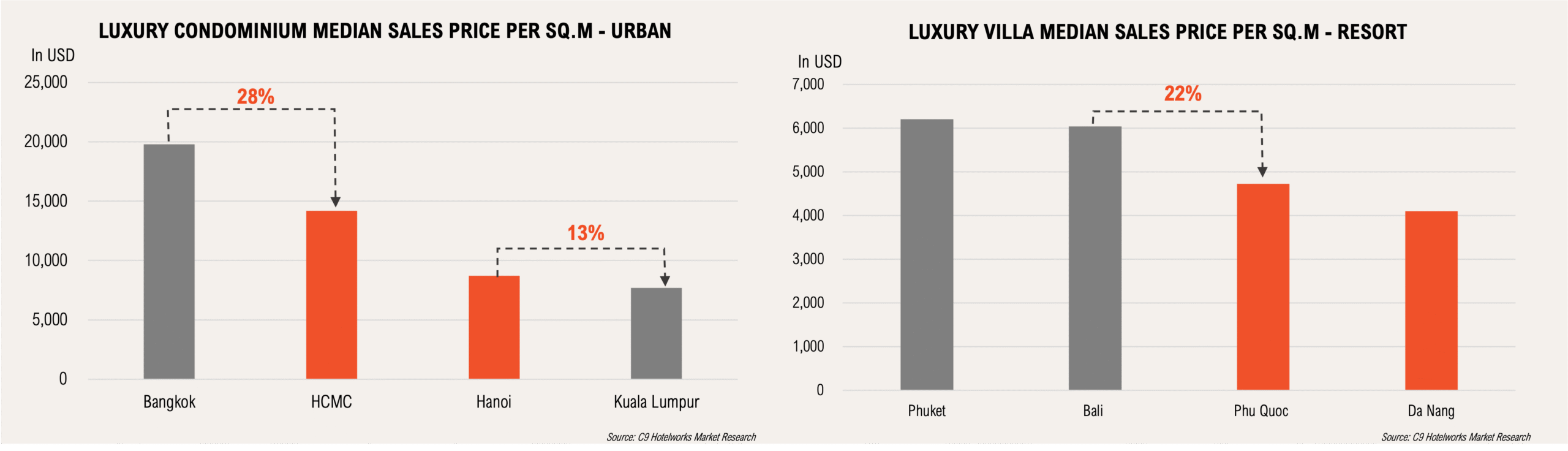
HCMC and Da Nang generate 41% and 21% of Vietnam’s branded residences value respectively, a combined 62%. HCMC contributes more than twice its 18% share of launched units, while Da Nang’s value share remains below its 23% unit share. Phu Quoc holds 1% of launched units but nearly 6% of value, the highest estimated value per unit among the key locations.
Development with a hotel dominates resort markets, accounting for 91% of supply in both Da Nang and Phu Quoc. Hanoi remains hotel-linked at 60%, with the remaining 40% in mixed-use projects. HCMC has the most diversified structure, split between with a hotel (41%), mixed-use (41%) and standalone (18%).
4. Ho Chi Minh City and Da Nang Account for 62% of Market Value
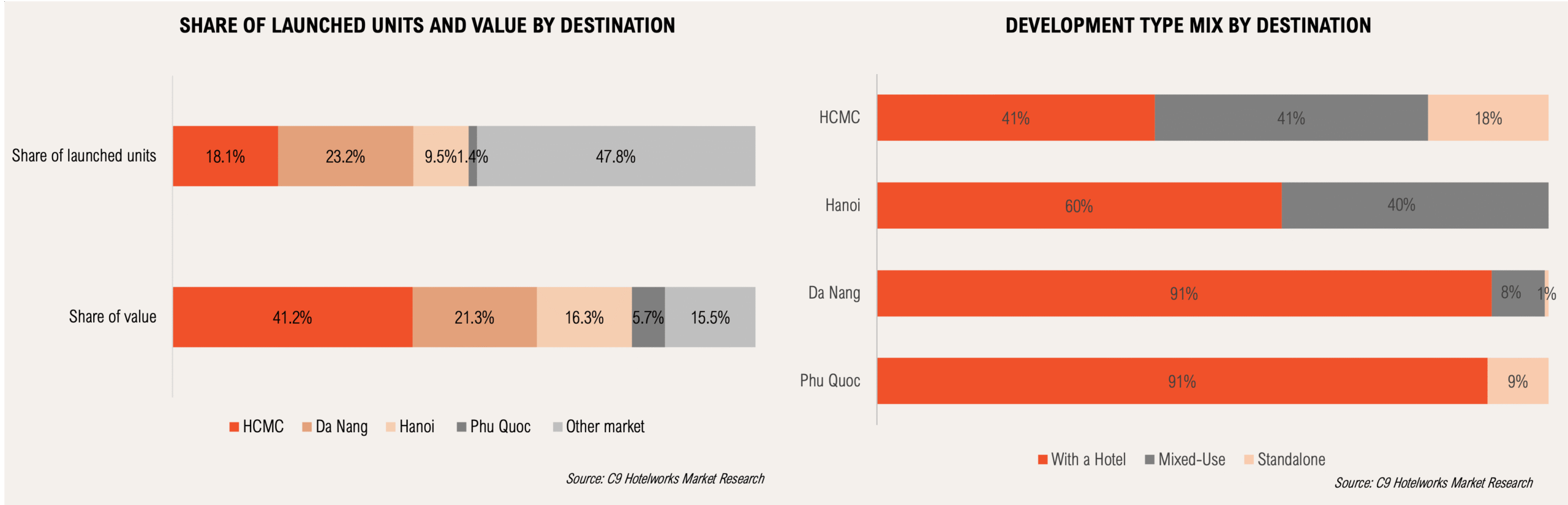
HCMC and Da Nang generate 41% and 21% of Vietnam’s branded residences value respectively, a combined 62%. HCMC contributes more than twice its 18% share of launched units, while Da Nang’s value share remains below its 23% unit share. Phu Quoc holds 1% of launched units but nearly 6% of value, the highest estimated value per unit among the key locations.
Development with a hotel dominates resort markets, accounting for 91% of supply in both Da Nang and Phu Quoc. Hanoi remains hotel-linked at 60%, with the remaining 40% in mixed-use projects. HCMC has the most diversified structure, split between with a hotel (41%), mixed-use (41%) and standalone (18%).
5. Public Infrastructure Investment Leads Branded Residences Growth
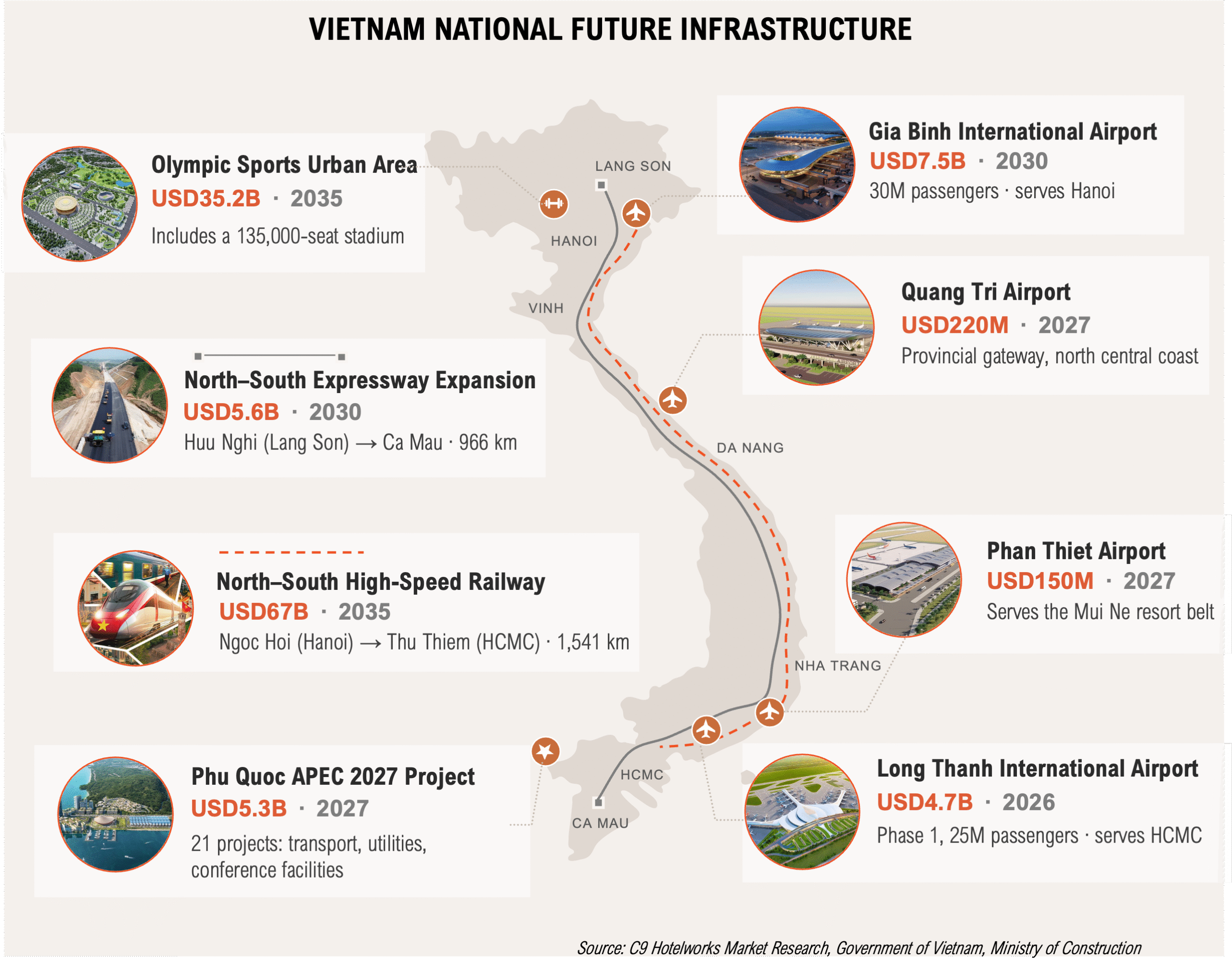
The eight infrastructure projects mapped in the report represent USD126 billion of approved capital expenditure, with targeted delivery from 2026 to 2035. The largest are the North–South High-Speed Railway (USD67 billion, 2035), running 1,541 km from Hanoi to HCMC, and Hanoi’s Olympic Sports Urban Area (USD35.2 billion, 2035), which includes a 135,000-seat stadium. Four of the eight projects target completion by 2027.
New airport capacity of 55 million passengers a year will serve Vietnam’s two largest urban markets: Long Thanh International Airport Phase 1 (USD4.7 billion, 25 million passengers, 2026) for HCMC, and Gia Binh International Airport (USD7.5 billion, 30 million passengers by 2030) for Hanoi.
In May 2025, Vietnam selected Phu Quoc as host city for APEC 2027 and approved 21 priority projects worth USD5.3 billion under Decision 948/QD-TTg, covering transport, utilities and conference facilities. The government is prioritising airport, road and convention centre upgrades, which should improve accessibility and support tourism and demand for branded residences on the island.